

The Open University
 about.open.ac.uk
 Milton Keynes and Nationwide
 Thank you for your interest in becoming the next Chief People Officer at The Open University.
The Open University is one of the UK’s most distinctive institutions, transforming lives through learning for more than 50 years. Our mission is simple but powerful: to open up education and opportunity to people whose circumstances may not fit traditional models of higher education.
As we enter a new phase of strategic renewal, we are looking for an outstanding Chief People Officer to help shape the University’s future. A member of the Vice-Chancellor’s Executive and a senior leader, the CPO will play a central role in driving organisational effectiveness and ensuring we have the people, culture and capability needed to deliver our ambitions.
Working closely with the Vice-Chancellor and myself, Executive colleagues, Council and leaders across the University, the successful candidate will lead our people strategy, support cultural and organisational transformation, and help build a workforce equipped for a rapidly changing world shaped by digital innovation, AI and new approaches to lifelong learning.
The role offers a strong platform from which to build. People Services has played a key role in supporting organisational change, strengthening workforce planning and people insight, and contributing to the University’s return to a financial surplus.
The next CPO will help shape a future-ready organisation through strategic workforce planning, talent and succession management, leadership development, clearer career pathways and enhanced organisational capability. Just as importantly, they will help foster an inclusive, adaptive and high-performing culture in which colleagues feel valued, trusted and able to thrive.
Our values matter deeply. Being inclusive, innovative and responsive must be reflected in how we lead, make decisions, engage with colleagues and work with our recognised trade unions. We are seeking a leader who brings strategic judgement, personal credibility and the ability to navigate complexity while building confidence and commitment across a diverse university community.
We welcome applications from senior people leaders both within and beyond higher education. What matters most is the ability to operate at executive level, lead significant organisational change, build trusted relationships and bring a clear view of how people and culture drive organisational success.
This is a rare opportunity to help shape the future of a university with a unique public purpose, national reach and profound impact on the lives of students, colleagues and communities across the UK and beyond.








A university built to open opportunity
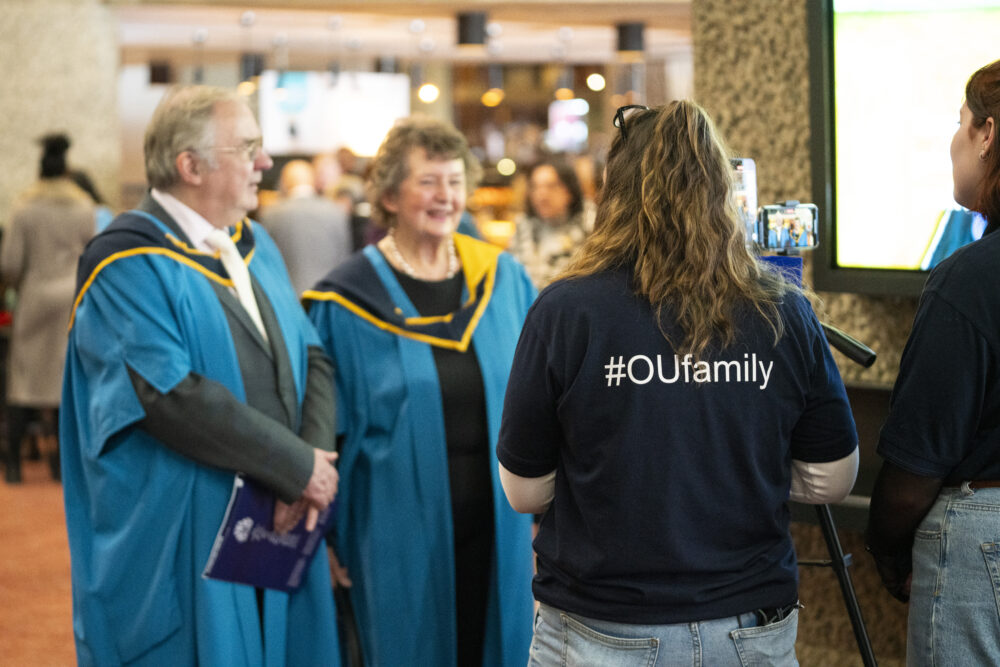
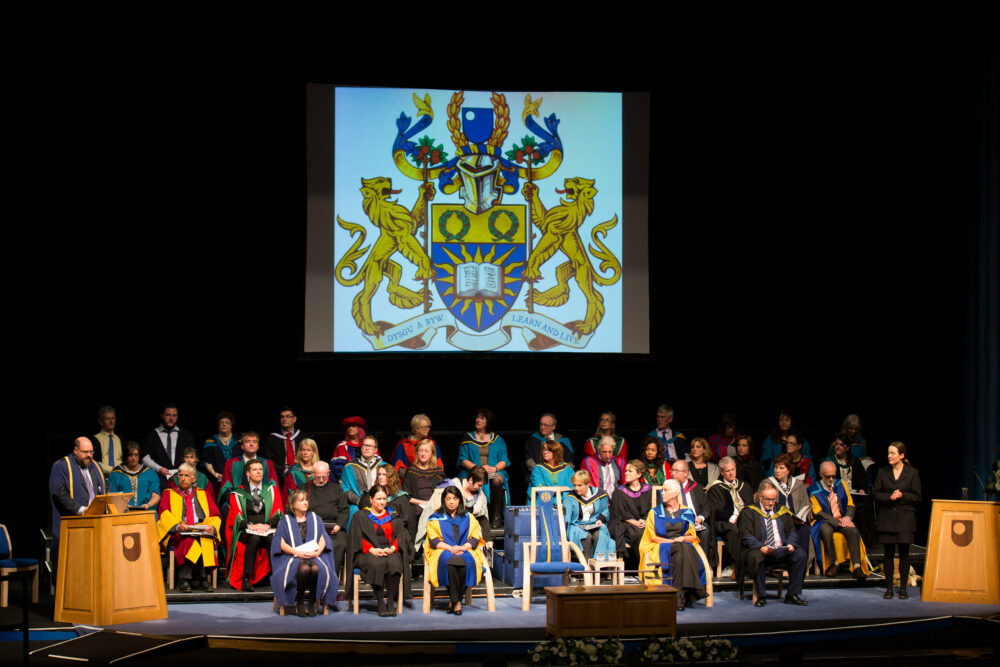
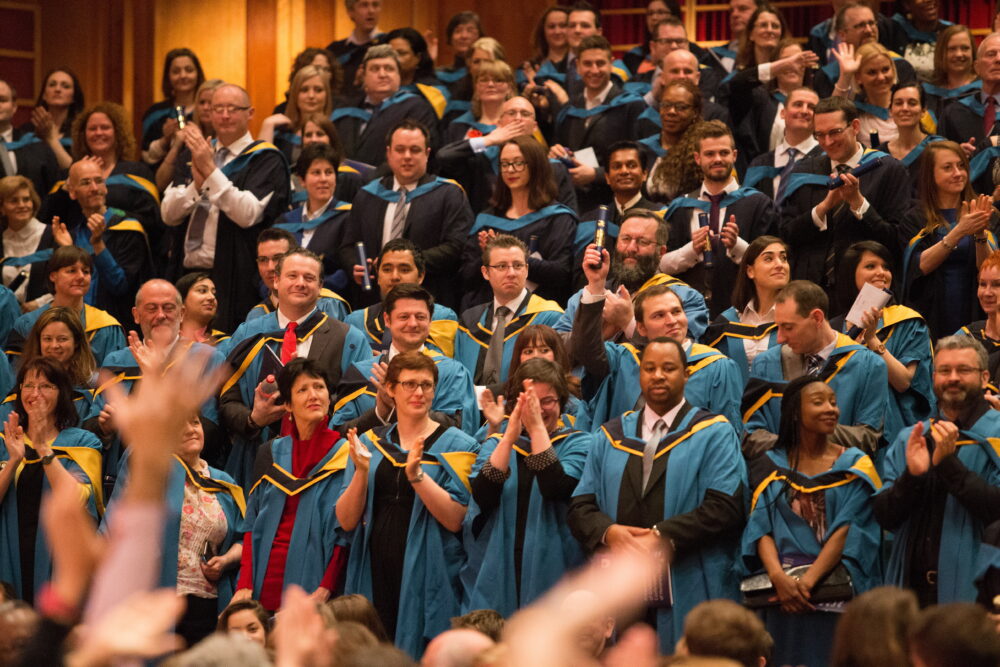
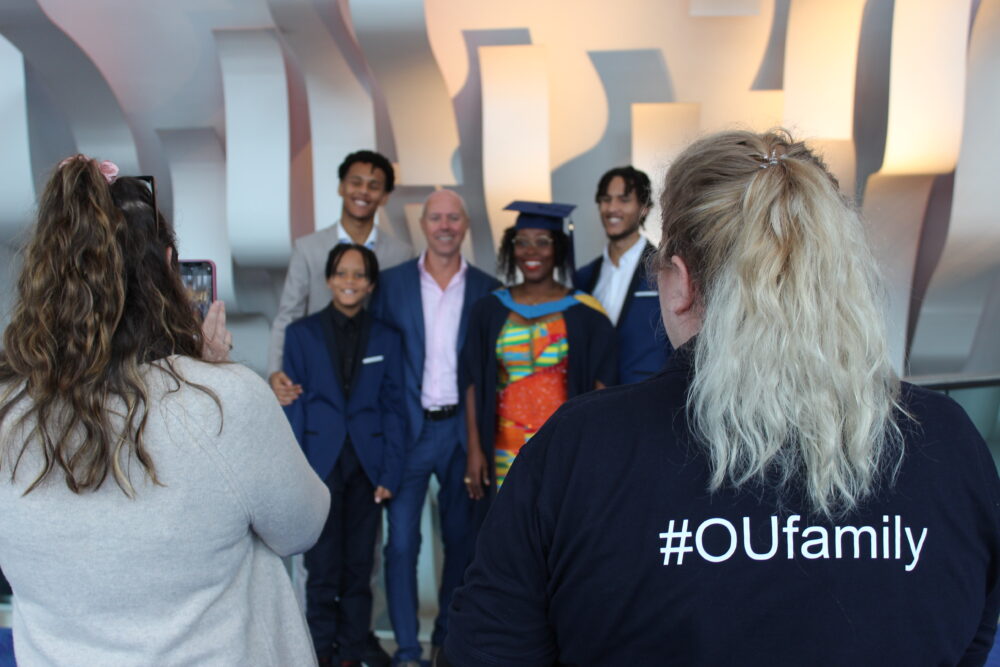
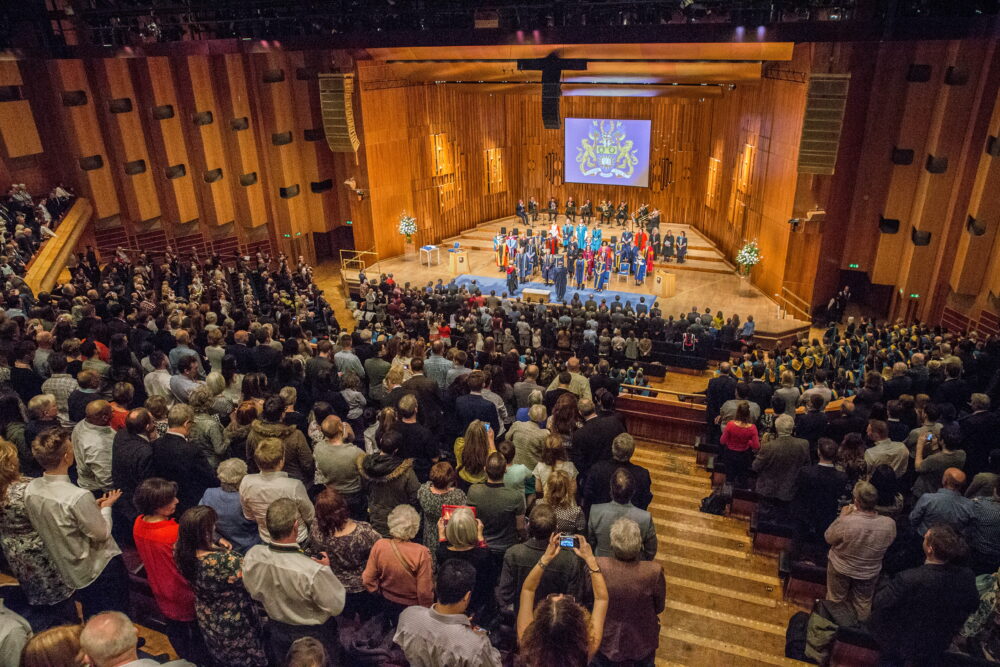
The Open University was founded in 1969 with a radical idea: that higher education should be open to people with the ambition to learn, regardless of background, location or circumstance. More than 55 years later, that mission still defines us. We are open to people, places, methods and ideas, and we remain one of the most distinctive and influential institutions in UK higher education.
Where you start should not limit where you go
Most OU courses have no formal entry requirements. Our model of flexible, supported distance learning enables people to study around work, caring responsibilities, health, geography and life. That openness is the purpose of the University. The OU helps people change career, return to learning, progress in work, gain confidence, build skills and transform their lives.
Scale with purpose
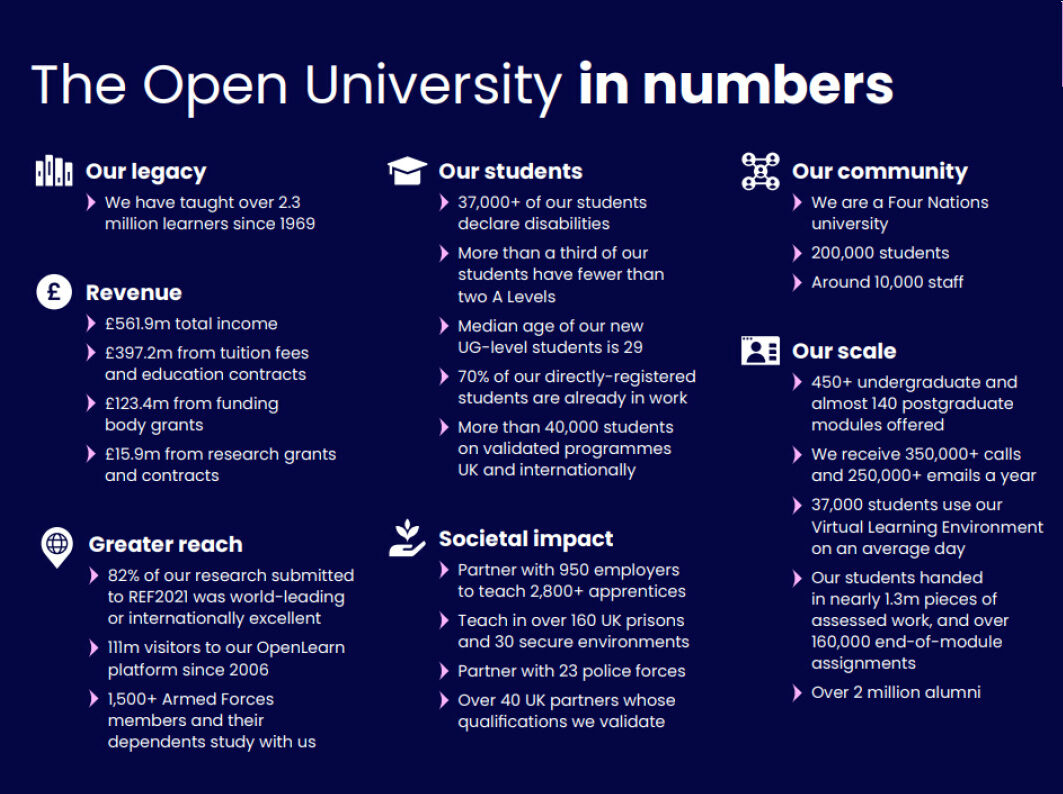
The OU is the largest academic institution in the UK by student numbers. We operate at a scale few universities can match, but our scale is always connected to mission. We work with students, employers, governments, public services, communities and civic partners to widen access, address skills needs and support lifelong learning.
One university, four nations
The OU is uniquely a four-nation university, working across England, Scotland, Wales and Northern Ireland, with activity in the Republic of Ireland and internationally. This gives us a distinctive role. We combine national reach with local understanding, working across different policy, funding and community contexts to support learners wherever they are.
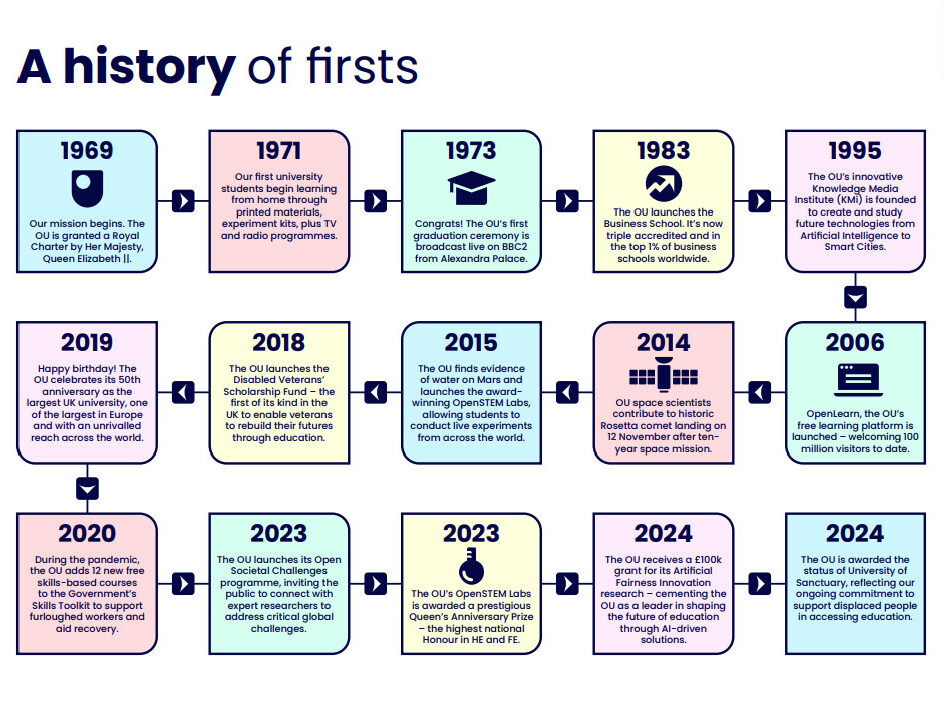
Innovation has always been part of the OU’s story. From late-night BBC lectures in the 1970s to today’s digital learning platforms, the University has used technology, academic expertise and partnership to bring learning to millions. This history of firsts is more than heritage. It shows how the OU has repeatedly rethought who higher education can reach, how learning can be delivered and how technology can open up opportunity.
Research, students and public value
The OU is also a research-intensive university with a strong commitment to impact. Our research underpins our curriculum and addresses real-world challenges through partnership, enterprise and knowledge exchange.
The student voice is central to the University. The Open University Students Association has represented OU students since 1972 and works in partnership with the University to ensure students are heard, supported and connected.
Looking ahead
The OU remains true to its founding mission, but the world around us is changing quickly. Financial sustainability, demographic change, new patterns of work, environmental pressures and the rapid development of digital technology and AI are reshaping society and higher education.
For the OU, this creates both challenge and opportunity. Our next chapter will require us to modernise, simplify and innovate while staying rooted in our purpose.
For the next Chief People Officer, this is the opportunity: to help lead the people, culture and organisational capability agenda of a university that has changed lives for more than half a century and is determined to keep doing so for the next 50 years.
To find our more about the Open University, please click here.
Since the beginning, The Open University has been more than a university. It has been a movement, founded on the belief that education can transform lives, communities and society. Our enduring mission, to be open to people, places, methods and ideas, has remained constant for more than 55 years. It continues to unite our students, colleagues, alumni and partners around a shared commitment to widening opportunity and delivering learning that changes lives.
The OU’s current strategy, Learn and Live, remains an important expression of that mission. It sets out the goals that continue to shape the University’s work: extending our reach, supporting student success, increasing societal impact, embedding equity and advancing environmental and social sustainability. For candidates, it provides valuable insight into the values, purpose and long-standing commitments that make the OU distinctive.
The University is now developing its next strategy, Opening Up. This will build on the same mission of openness while setting a renewed direction for the future. Opening Up is being shaped around three strategic priorities: strengthening our position in the market, improving student success and deepening our impact through partnerships. These priorities will be enabled by three core foundations: Finance and Estates, People and Digital.
You will play a central role in delivering the University Strategy 2027-32. Leading the People & Culture Enabler, you will set the foundations required to execute at pace and with discipline. Ensuring the University has the talent, leadership, culture and organisational capability required to achieve its ambitions, creating a more agile, inclusive and future-ready institution.
Our values of being inclusive, innovative and responsive will continue to matter deeply. They are not abstract statements. They describe how we work together, how we support each other, how we lead change and how we make decisions. For the next Chief People Officer, the opportunity is to help ensure those values are lived in practice across a large, complex and deeply committed university community.
Further information on Learn and Live, the OU’s current strategy, can be found here.
The University’s governing body is the Council, which focuses on the University’s overall strategy, finances, property, staff and students. It is supported by a number of subcommittees, such as Finance and Audit Committees.
The Council is chaired by the Pro-Chancellor. The Council has the ultimate authority within the OU, but it has to respect the views of the Senate in academic matters. The Senate is the academic authority of the University, responsible for academic strategy, policy, priorities and performance. The Vice-Chancellor is accountable to the Council for maintaining and promoting the efficiency and good order of the University.
The Vice-Chancellor chairs the Executive Board in their capacity as Chief Executive of The Open University.
The role
The Chief People Officer (CPO) is a key member of the Vice-Chancellor’s Executive and provides strategic leadership for the Open University’s people, culture and organisational capability. The role is accountable for ensuring that the University has the leadership, workforce, organisation design, systems and culture required to deliver its new strategy, now and in the future.
The CPO sets the strategic direction for people and culture, acting as a trusted advisor and business partner to the Vice-Chancellor, Executive colleagues and Council. The postholder leads the development and delivery of an integrated People Strategy that enables excellent student outcomes, a high‑performing and inclusive culture, and long‑term institutional sustainability.
Key accountabilities
Strategic leadership and executive oversight
Take an active role in the Vice-Chancellor’s Executive Team which shares collective responsibility for:
Culture, leadership and organisational capability
Workforce strategy and change
People Services Leadership
External leadership and reputation
ABOUT YOU
Success in this role requires:
Previous experience
This is a senior University executive appointment offering the opportunity to shape the future of one of the world’s leading providers of open and distance learning. You will be appointed on terms appropriate to the scale, responsibility and profile of the role. Salary will be negotiated with the preferred candidate but will be no less than £157,000, alongside a comprehensive benefits package designed to support your wellbeing, professional development and life outside work.
You’ll also benefit from:
Learn more about our full range of benefits on our Staff Benefits page.
Anderson Quigley is acting as an advisor to The Open University, an executive search process is being carried out by Anderson Quigley in addition to the public advertisement.
The closing date for applications is noon, Monday 3 August 2026.
Applications should consist of:
Should you wish to discuss the role in strict confidence, please contact Ed Pritchard at +44 (0)7980 817 927 or ed.pritchard@andersonquigley.com
| Closing date | Monday 3 August 2026 |
| Preliminary interviews | Weeks commencing 10, 17 & 24 August 2026 |
| Shortlisting | Friday 28 August 2026 |
| Informal meetings with the OU | Throughout September 2026 |
| Final interviews | Friday 25 September 2026 |